Kids are more willing to help than it sometimes seems. What usually gets in the way is unclear jobs, uneven turns and rewards that arrive weeks later. A few changes fix most of it.
Pick chores that fit their age
| Age | Chores they can own |
|---|---|
| 3 to 5 | Put toys away, feed the pet, put clothes in the hamper, help set the table |
| 6 to 8 | Make the bed, clear the table, sort laundry, water plants, wipe the bathroom sink |
| 9 to 12 | Load the dishwasher, vacuum, take out trash and recycling, fold laundry, clean their room |
| 13 and up | Cook a simple meal, mow the lawn, clean the bathroom, do their own laundry |
Make the job clear
"Clean your room" means something different to a parent and an eight-year-old. Break chores into what done looks like: bed made, clothes in the hamper, floor clear. A short checklist does the reminding so you don't have to.
Take turns fairly
Arguments about chores are usually arguments about fairness. Rotate the unpopular jobs (dishes, trash, bathroom) on a set schedule so everyone can see whose turn it is.
Make progress visible
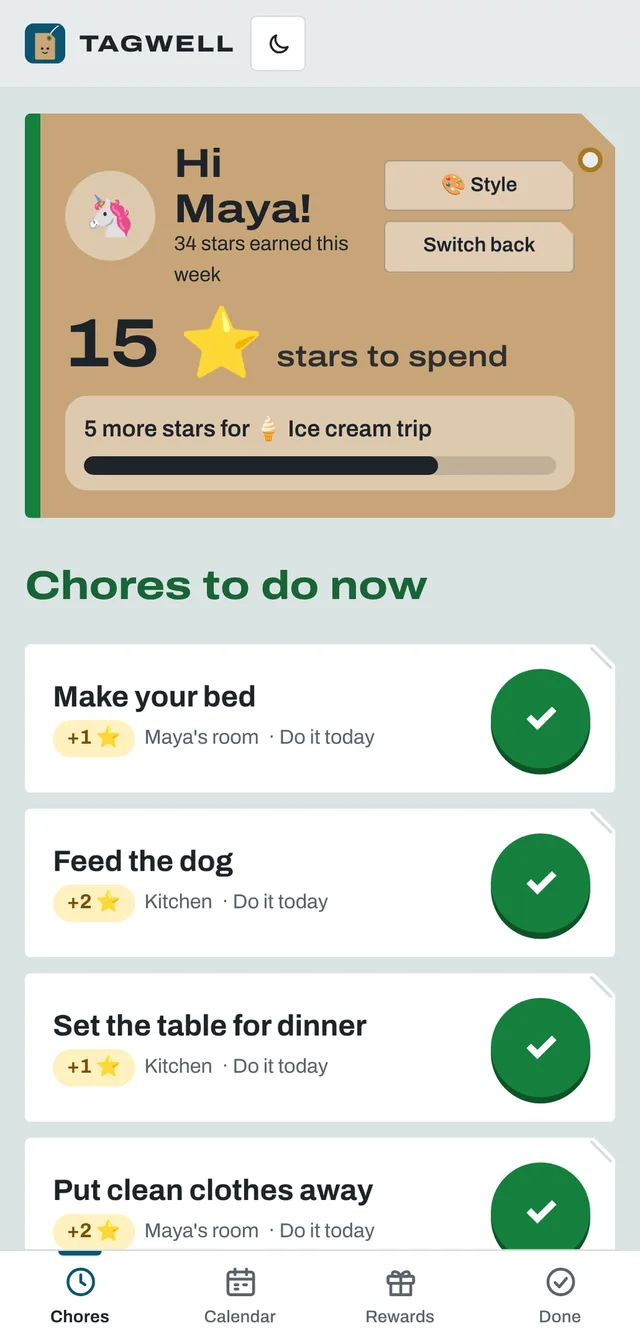
Kids respond to seeing progress right away. Stars or points for each chore, a running total and a celebration when the list is done all work better than a reward promised for "the end of the month".
Let them choose the reward
Agree on a short list of rewards together, each with a price in stars: extra screen time, picking dinner, a later bedtime on Friday, a trip to the park, or pocket money. Saving up teaches more than any lecture.
Keep it light
- Thank them every time, even for a so-so job.
- Do chores at the same time each day so they become a habit.
- Don't redo their work in front of them. Show them once, then let it be.
Set up a chore chart for your kids in Tagwell
Add their chores, pick rewards together and let them tick things off on their own screen. They earn stars, you approve the rewards.